
Pet first aid for Dogs and Cats

In an emergency, seek care IMMEDIATELY. First aid does not replace veterinary care.
Nobody likes to imagine that their pet could get hurt, but should something happen, here are some helpful pet first aid tips you can do in the first few minutes to keep your pet safe until a veterinarian can take over. It comes down to three things: knowing what to look for, knowing what you can safely do, and knowing when to get help.
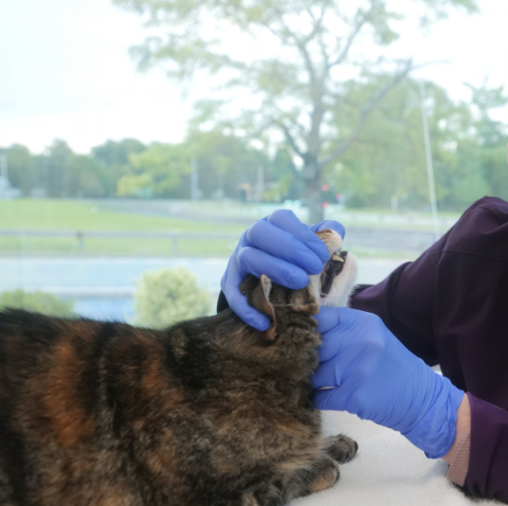
This guide builds on our pet first aid demonstration, with practical reminders for dogs and cats. Keep the matching handout on your fridge, save this page, and share it with anyone who helps care for your pet.
| If your dog or cat is… | Do this first: | Then |
| Bleeding | Press firmly with clean gauze or a towel for at least three minutes | Heavy bleeding: go to the ER now and keep pressure on during the drive |
| Choking | Keep them calm; remove an object only if you can clearly see and safely reach it | Get urgent veterinary care, even if the object comes out |
| Overheating | Move to shade or air conditioning; wet with cool (not ice-cold) water and use a fan | Contact an emergency veterinary hospital immediately |
| Poisoned or ate something harmful | Call your veterinarian or ASPCA Poison Control at 888-426-4435 ASPCA Poison Control | Don’t induce vomiting unless you’re told to |
| Struggling to breathe, collapsed or has pale or blue-gray gums | Keep them calm and limit handling | Go to the Animal ER now |
How do I know if my dog or cat needs emergency care?
Seek emergency veterinary care right away if your dog or cat has trouble breathing, collapses, is severely weak, or has newly pale or blue-gray gums.
For cats, open-mouth breathing is an emergency. Keep your cat calm, limit handling, and contact an emergency veterinary hospital immediately. Don’t wait to see whether it passes.
Your safety matters, too. Pain and fear can make even the gentlest dog or cat bite. Keep your face away from their mouth, avoid hugging or tightly restraining them, and ask someone to help when possible.
What is normal for my dog or cat?
The best way to spot an emergency is to know your pet’s normal breathing, energy, behavior, and gum color before anything goes wrong.
You already know their favorite sleeping spot, their dinner routine, and the sound of them getting into something in the next room. When your dog or cat is relaxed, take a moment to observe how they breathe and move. If they’re comfortable with it, gently lift their lip to look at their gums.
Naturally dark patches can be normal, so look for changes in an area that is usually pink. Never force a gum check or risk a bite. Your veterinary team can help you learn what’s normal for your pet.
What should I do if my dog or cat is bleeding?
Apply firm, steady pressure with clean gauze or a towel for at least three minutes. Heavy bleeding needs emergency care immediately.
- Press firmly over the bleeding area with clean gauze or a towel.
- Hold for at least three minutes without lifting to check.
- If blood soaks through, add another layer without removing the first.
- For heavy bleeding, leave for the emergency hospital right away. Maintain pressure during transport; don’t wait for three minutes to pass before leaving.
What about a bleeding or torn nail? For minor nail bleeding, styptic powder can help. A torn, dangling, or painful nail still needs a veterinarian’s attention. Don’t try to pull off the damaged part yourself.
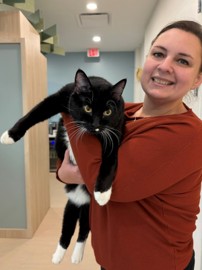
What should I do if my dog or cat is choking?
Keep your pet calm, and get urgent veterinary care. Only remove an object you can clearly see and safely reach.
A choking dog or cat may paw frantically at their mouth, gasp, make unusual breathing sounds, or develop blue or white gums.
- If they can still breathe: Keep them calm and seek urgent veterinary care.
- If you can see an object: Attempt removal only when it is clearly visible and safely reachable. Never sweep blindly inside the mouth or push the object farther down.
- If they cannot breathe: Contact an emergency veterinary hospital immediately for first-aid instructions while arranging transport. This is life-threatening and needs immediate action.
Even if the object comes out and your pet seems back to normal, they still need an examination. Choking can cause complications that aren’t obvious right away.
What should I do if my dog or cat is overheating?
Move your pet to shade or air conditioning, start cooling with cool (not ice-cold) water and a fan, and contact an emergency veterinary hospital immediately.
Signs of overheating in dogs and cats: heavy panting with excessive drooling, weakness, confusion, or collapse.
- Move your pet to shade or air conditioning.
- Contact an emergency veterinary hospital immediately.
- Wet their body with cool—not ice-cold—water.
- Use airflow from a fan or air conditioning.
Avoid wrapping them in wet towels, which can trap heat. Arrange emergency care right away, even if they start to look more comfortable.
What should I do if my dog or cat eats something toxic?
Call your veterinarian or ASPCA Poison Control at 888-426-4435 right away. The service is available 24/7; a consultation fee may apply.
The missing food, chewed package, or open medication bottle is enough reason to call. You don’t need to wait for symptoms or be certain something is poisonous before asking for help.
Have this ready when you call:
- The product, and the packaging if you have it
- Approximately how much is missing
- When it happened
- Your pet’s weight
- Any symptoms
If poison control gives you a case number, share it with the treating veterinary hospital. Don’t induce vomiting or give medications or home remedies unless a veterinarian or poison control specifically instructs you to.
What should be in a pet first aid kit?
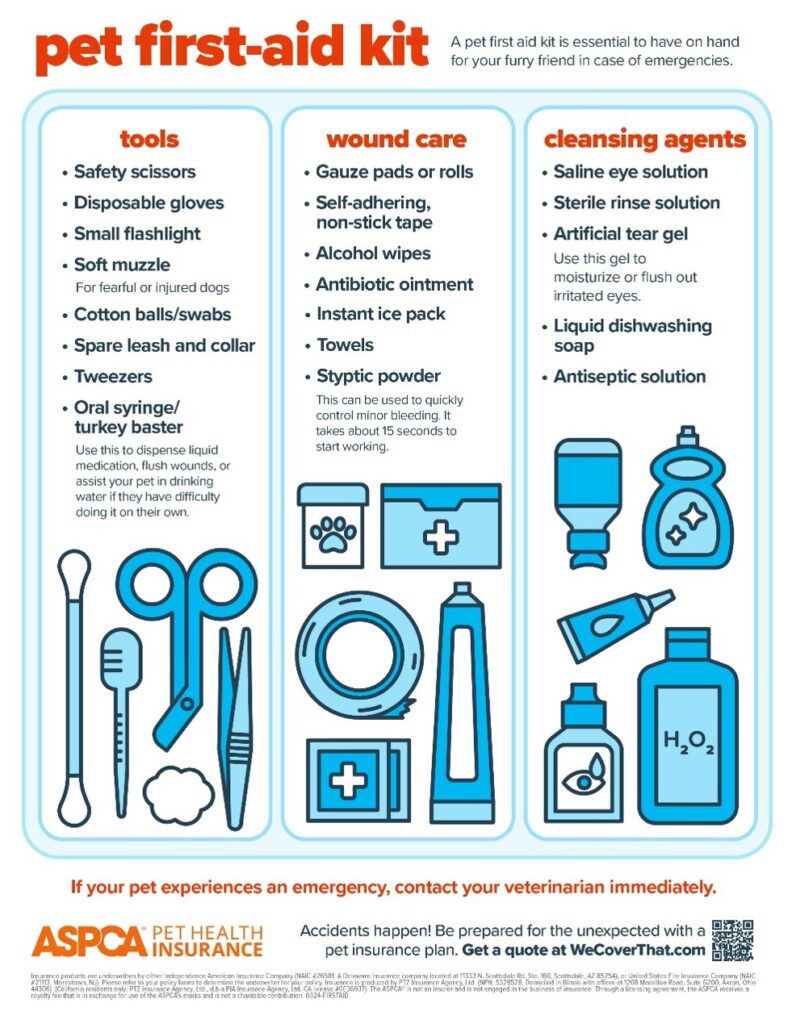
A basic pet first aid kit for dogs and cats holds bleeding supplies, your pet’s medical information, and the phone numbers you’ll need in a hurry. Keep it together in one place you can find fast.
Supplies
- Gauze pads
- Clean towels
- Disposable gloves
- Self-adhering bandage wrap
- Styptic powder for minor nail bleeding
- A spare leash, and a carrier for cats and small dogs
Pet first aid FAQs
When should I take my dog or cat to the emergency vet?
Go right away for trouble breathing, collapse, severe weakness, newly pale or blue-gray gums, heavy bleeding, choking, or overheating. If you’re not sure, call. You don’t need to be certain it’s an emergency to ask.
Is open-mouth breathing in cats an emergency?
Yes. Open-mouth breathing in a cat is an emergency. Keep your cat calm, limit handling, and contact an emergency veterinary hospital immediately.
Should I make my dog throw up after eating something toxic?
No, not unless a veterinarian or poison control specifically tells you to. Call your veterinarian or ASPCA Poison Control at 888-426-4435 first.
What is the phone number for pet poison control?
ASPCA Poison Control is 888-426-4435. It is available 24/7, and a consultation fee may apply.
How long should I apply pressure to a bleeding wound on my dog or cat?
Hold firm pressure for at least three minutes without lifting to check. If the bleeding is heavy, don’t wait. Head to the emergency hospital and keep pressure on during the drive.
Should I use ice water to cool down an overheated dog?
No. Use cool, not ice-cold, water along with airflow from a fan or air conditioning. Avoid wrapping your pet in wet towels, which can trap heat.
Does my pet need to see a vet after choking if the object came out?
Yes. Choking can cause complications that aren’t obvious right away, so your dog or cat still needs an examination.
We’re here to help
You know your pet. We’re here to help you care for them—with clear answers, practical guidance, and a plan for what comes next.
In an emergency, seek care IMMEDIATELY. First aid does not replace veterinary care.